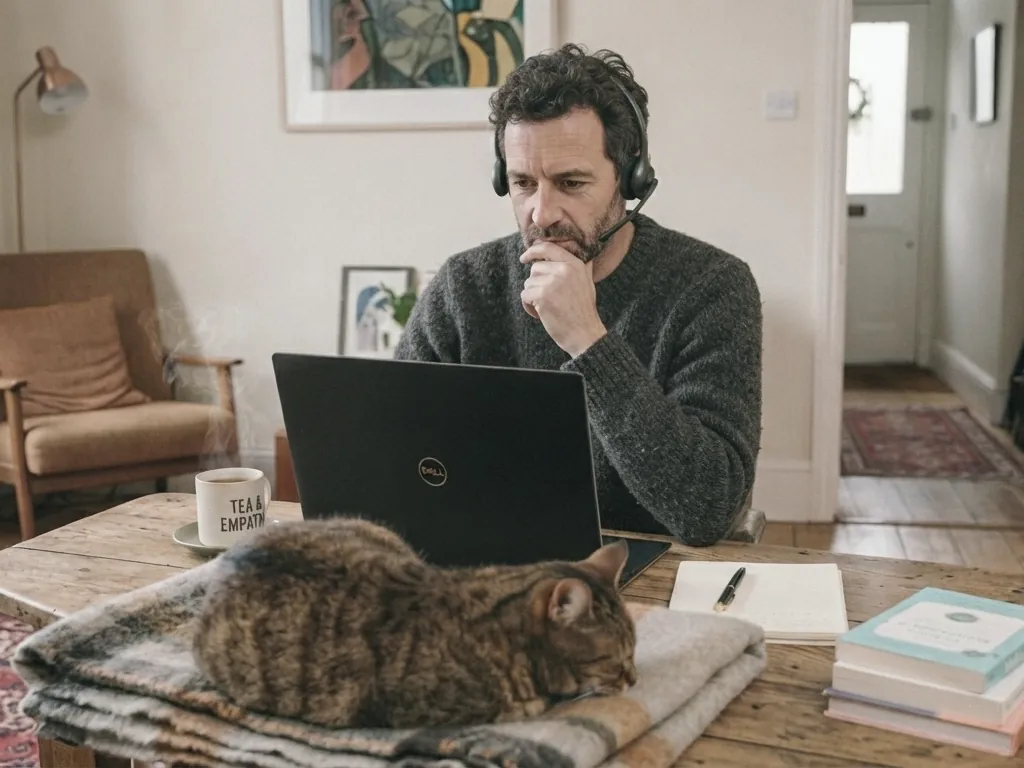
Most of my therapy takes place online.
Sessions are by secure video, at a time agreed in advance, from a private space of your choosing.
For many people this makes therapy easier to fit around work and family, removes travel time, and means help is available wherever you live.
The same structured, evidence-based therapy, from wherever you are.
Online therapy is not a second-best option.
Research comparing therapy by video with therapy in the same room, including reviews that combine the results of many studies, has found that CBT works comparably well in both formats for difficulties including anxiety, depression, OCD and post-traumatic stress.
How online sessions work
Your privacy
You join from a space of your choosing, at home or elsewhere: somewhere that feels safe and private, where you won't be overheard or interrupted.
The session
Sessions are 50 minutes, usually weekly, and follow the same structure as sessions in person. We address the things that matter most to you, and plan and practise in sessions how to challenge and change them.
Worksheets
Any worksheets or written material we work on together are yours. They can be shared with you at any point, and at the end of treatment.
A careful close
Each session ends with some time to pause, reflect and make sense of what has come up, so you can return to your day feeling settled rather than overwhelmed.
What works well online
CBT
For anxiety, panic, depression, low self-esteem, perfectionism and burnout.
CBT with ERP for OCD
Working by video can be an advantage: for fears about contamination or checking at home, practice can take place exactly where the OCD happens.
EMDR
For trauma and PTSD. EMDR can be delivered effectively by video; I guide each stage of processing in session, and we only begin once preparation is in place.
CBT for insomnia (CBT-I)
It also means you don't need to travel when you are already running on very little sleep.
Is online therapy right for you?
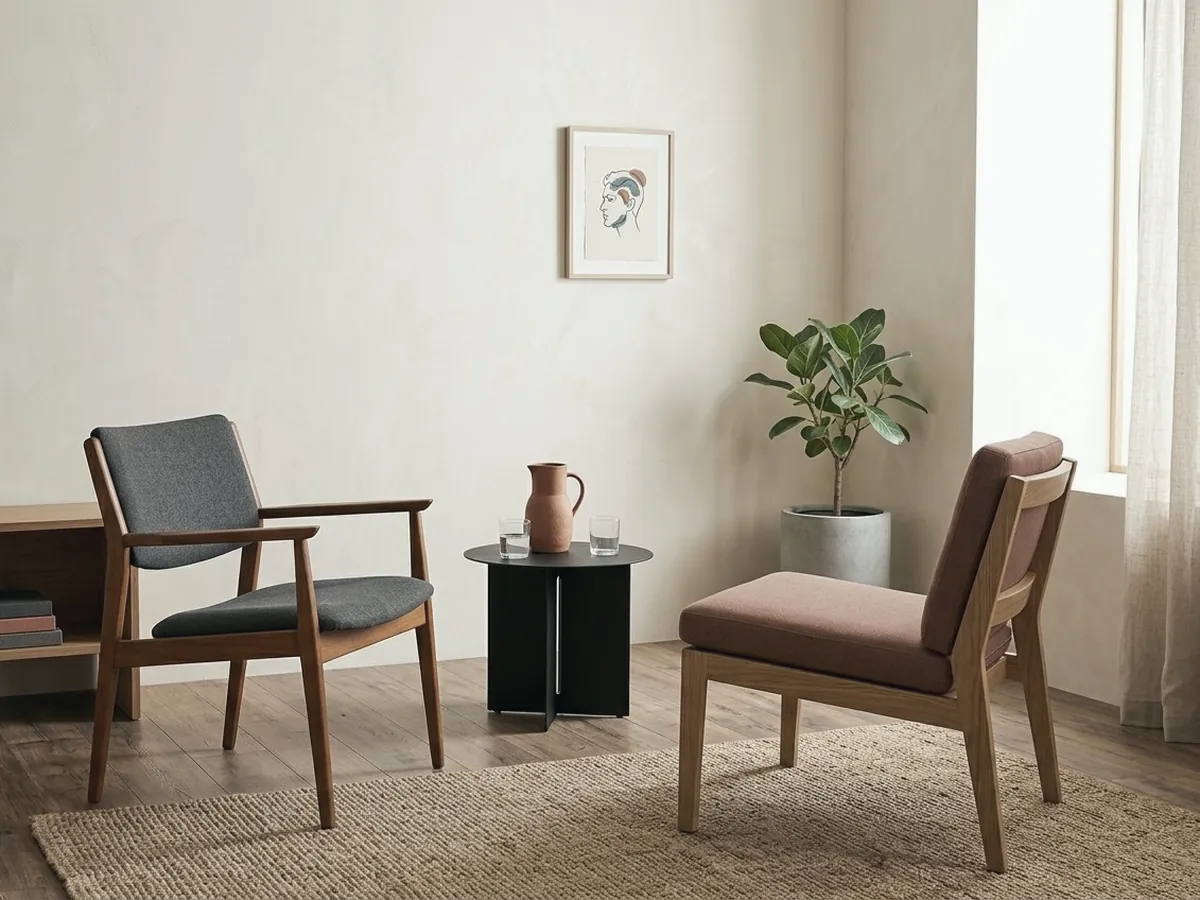
Online therapy suits most people who can find a private, quiet space for the length of a session.
It may suit you less well if you have nowhere you can talk without being overheard, if a poor internet connection would make sessions unreliable, or if you simply feel strongly that you would rather be in the same room.
If any of these apply, we can talk it through during the free consultation; I also offer face-to-face appointments in Queen's Park, North West London.
Some people have all their sessions online; others combine online and face-to-face appointments, depending on what suits them.

Privacy and confidentiality
Online sessions are kept just as confidential as sessions in person. I use a secure video platform and see people from a private room where we cannot be overheard.
I ask you to do the same from your side: a room with the door closed, and headphones if others are at home. More about how your information is handled is in my privacy notice.
Getting set up
- A laptop, tablet or computer with a camera works best; a phone is fine if it is propped up and steady.
- A reliable internet connection, and headphones if you would like more privacy.
- A private space where you won't be interrupted for 50 minutes.
- A pen and paper, or somewhere to make notes.
Is this the right service for you?
I work with adults (18+) on a private, self-pay basis. My practice is suited to adults who are managing their day-to-day lives, even if that takes considerable effort, and who are not currently at risk.
It starts with a free 10-minute phone call, so we can talk about what has been happening and whether I can help. From there, the first session is a 50-minute assessment. If I think a different service would suit you better, I'll say so and help you think about where to turn.
If you are having thoughts of ending your life, or feel unable to keep yourself safe, please don't wait for an appointment. Call 999 or go to A&E, call NHS 111, or contact Samaritans, at any time, on 116 123.