

Cognitive behavioural therapy, or CBT, is a structured, practical form of talking therapy.
It explores how your thoughts, feelings and behaviours influence one another, and how certain patterns can keep difficulties going.
Rather than simply talking about what's wrong, CBT helps you understand what is happening, why it persists and what you can do differently.
CBT is less about understanding why a problem started, and more about recognising what keeps it going now, and what you can do to change it.
CBT is one of the most extensively researched psychological therapies.
It is recommended by the National Institute for Health and Care Excellence (NICE) for a range of mental health difficulties, including anxiety disorders, OCD and depression. Research also shows that the benefits of CBT can extend beyond the end of treatment, as people continue to use the skills they have developed.
What CBT can help with
I use CBT with adults for a range of difficulties, adapting the approach to the specific problem rather than applying a generic method:
OCD
Including harm OCD, moral OCD, relationship OCD and intrusive thoughts, using CBT with exposure and response prevention (ERP).
Anxiety
Including persistent worry, social anxiety and health anxiety.
Panic attacks and panic disorder
Depression and low mood
Trauma and PTSD
Using trauma-focused CBT, and EMDR where it suits better.
Low self-esteem and perfectionism
Burnout and stress
Sleep problems and insomnia
Using CBT for insomnia (CBT-I).
How CBT works in practice

We start with an assessment, so that I understand what is happening for you, how it affects your life and what you would like to change.
Together we then build a clear picture of what keeps the problem going: the thoughts, reactions and habits that made sense at the time but now keep you stuck. This shared understanding guides everything that follows.
Sessions are active and collaborative. We agree goals, try out new ways of responding, and you practise between sessions, because real change happens outside the therapy room as well as in it.
Between-session practice is tailored to your circumstances and agreed together. It is not about giving you a list of tasks to complete, but about helping you put what we discuss into practice in your everyday life. We review progress at regular points, so you always know where things stand.
How long CBT takes
Sessions are 50 minutes, usually weekly. Many people complete a course of CBT within 8–20 sessions, although this varies depending on the nature and complexity of the difficulties and the goals of treatment.
Some difficulties respond to shorter treatment; longer-standing or more complex ones may need more time. You won't be committing to an open-ended course.
CBT or EMDR?
For most difficulties, CBT is where we start. When distressing memories or past experiences are at the centre of the problem, EMDR may suit better, and both are recommended by NICE for post-traumatic stress disorder.
Because I am trained and accredited in both, we can decide together which approach fits, rather than fitting you to the one therapy on offer.
Why accreditation matters
In the UK, "CBT therapist" is not a protected title, so anyone can use it. Accreditation with the British Association for Behavioural and Cognitive Psychotherapies (BABCP) shows that a therapist has completed recognised CBT training, practises to the association's standards, and continues to receive clinical supervision and training.
I am BABCP-accredited, hold a Diploma in CBT from Royal Holloway, University of London, and have been in clinical practice since 2015. I am also an EMDR Europe accredited practitioner.


CBT online
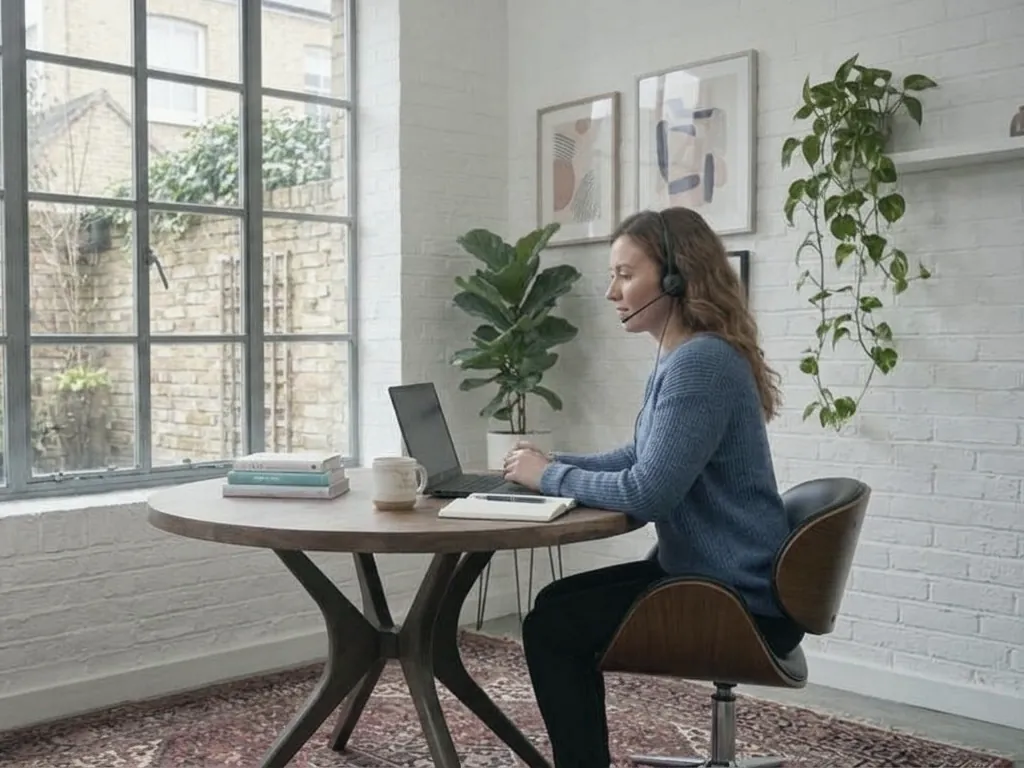
CBT works well over video, and for many people online therapy offers the same opportunity for meaningful therapeutic work as meeting in person. You can attend sessions from home, without travelling, while working through the same structured and collaborative approach.
I offer online CBT to adults across the UK using secure video calls. I am based in Queen's Park, North West London, where I also offer face-to-face appointments.
Questions people often ask
Is CBT just positive thinking?
No. CBT is not about replacing difficult thoughts with cheerful ones. It is about looking at thoughts and reactions carefully, testing them against experience, and finding responses that work better for you.
Do I need a referral from my GP?
No. You can contact me directly. I also welcome referrals from GPs, psychiatrists and other clinicians.
Can CBT be combined with medication?
Yes. Some people find medication helpful alongside CBT, and some come to therapy already taking it. I don't prescribe, so any decisions about medication are best made with your GP or psychiatrist.
Is this the right service for you?
I work with adults (18+) on a private, self-pay basis. My practice is suited to adults who are managing their day-to-day lives, even if that takes considerable effort, and who are not currently at risk.
It starts with a free 10-minute phone call, so we can talk about what has been happening and whether I can help. From there, the first session is a 50-minute assessment. If I think a different service would suit you better, I'll say so and help you think about where to turn.
If you are having thoughts of ending your life, or feel unable to keep yourself safe, please don't wait for an appointment. Call 999 or go to A&E, call NHS 111, or contact Samaritans, at any time, on 116 123.